
Home › Tuck Boxes › Straight Tuck End Boxes
Straight tuck end boxes use top and bottom flaps that tuck into the carton in the same direction. This familiar folding-carton construction can suit many lightweight retail products when its dimensions, board and closure match the item. Compare the products below, then share your product details to discuss a specification.
Specification confirmed with your quote.
Specification confirmed with your quote.
Specification confirmed with your quote.
Specification confirmed with your quote.
Explore the current products in this category, each with its own material or product focus. Open a product page to review its details and request a quote.
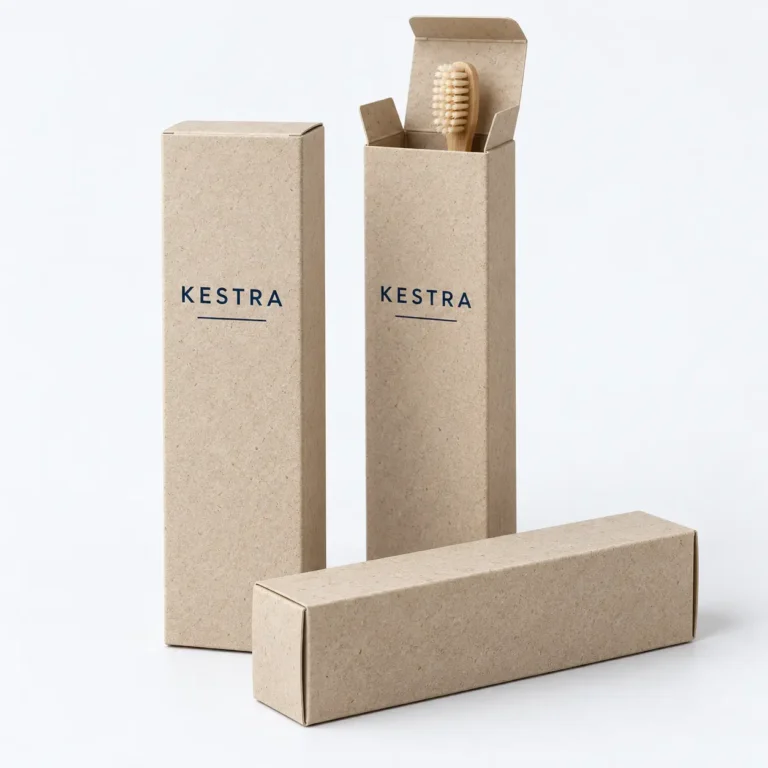
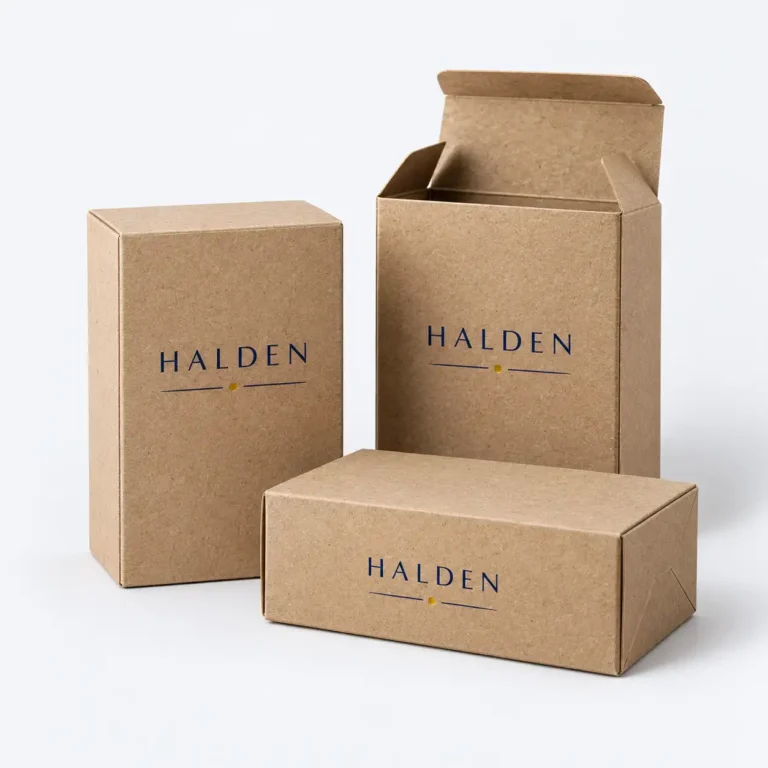
Choose this product if a natural brown board appearance is part of your packaging direction. Consider how your artwork will read on the selected kraft stock, and confirm the exact board and print options before planning the design.
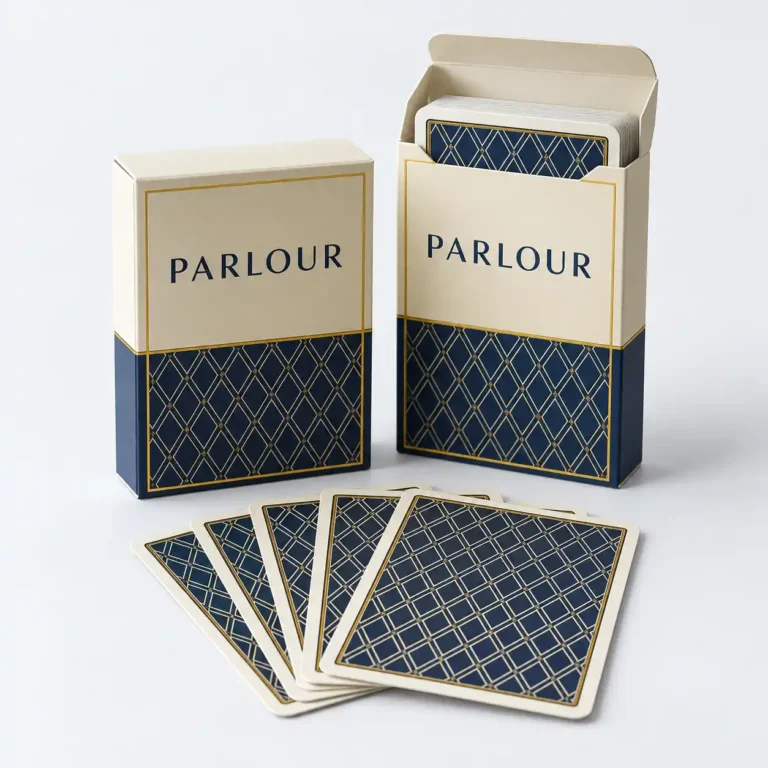
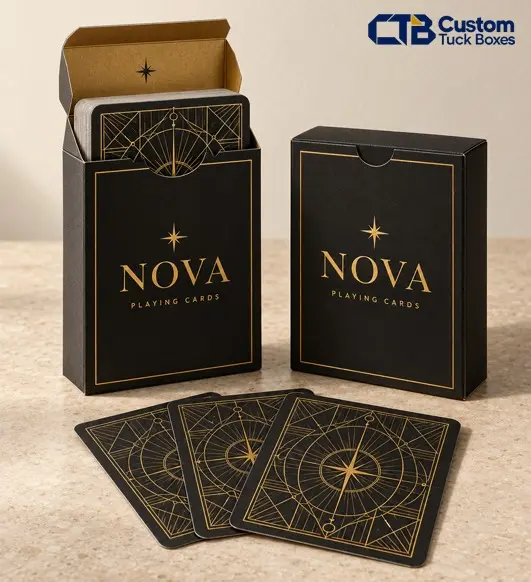
Choose this product if you are packaging a deck and need the carton considered around the complete stack, not just one card. Include the deck thickness and any booklet or insert in your measurements.
Choose this product if your brief includes specific material or environmental requirements you want to discuss. Ask for the exact board and supporting information; a kraft appearance or product name alone does not verify an environmental claim.
A straight tuck end carton is assembled from a cut and creased sheet of board. The body forms four main walls around the product. A front and back panel provide the primary display faces; the two narrower side panels join them and create the carton depth. Artwork is laid out on the flat carton blank, so panel position and orientation should be checked on a folded proof or approved dieline.
At the top and bottom, the closure flaps tuck into the box in the same direction. The main tuck flap folds over the opening and inserts into the carton; smaller dust flaps can fold inward at the sides, depending on the exact construction. The resulting closure is familiar to many product buyers, but the way the carton is filled and opened should be considered during design.
Because both ends use tuck closures, this style may be convenient when access to both ends is useful. Its actual base support and load capacity depend on the board, dimensions, closure design and product weight. Do not infer a weight rating from the category name. If the product is heavy, fragile or likely to face rough handling, discuss the complete specification and ask whether another construction or added support is more appropriate.
On a shelf, the wide panel can carry a product identity or key visual, while side panels may provide additional information. In transit, the carton should be assessed as part of the full packed parcel; a tuck closure alone is not a shipping-performance guarantee. Tell us whether the finished carton will be shelf displayed, placed in an outer parcel, or handled in another way.
Construction
Straight tuck end; top and bottom flaps tuck in the same direction.
Typical uses
Tell us about your product and how it will be packed and sent, and we will advise whether this style is suitable.
Size range
Boxes are made to your product’s dimensions, so share the length, width and depth with your quote request.
Board / material
Several board options are available, and we will recommend a suitable board and thickness for your product.
Board thickness
Several board options are available, and we will recommend a suitable board and thickness for your product.
Printing
Full-colour (CMYK) printing is available, and we can confirm inside printing and panel coverage for your design.
Finishes
Finishing options include matt finish, foiling, spot UV, embossing and debossing, depending on the board and design.
Add-ons
This can be added on request, depending on your product and box style.
Minimum order
Minimum order quantity is 50 boxes.
Turnaround
Typical turnaround is 12 to 15 working days, with delivery across the UK.
Proof
Send your artwork or a reference with your quote request, and we will confirm the artwork, dieline and approval steps for your order.
Final specifications are confirmed with your quote and artwork proof.
The main closure flap needs enough room to fold and tuck into the carton. Confirm the proposed dimensions and flap arrangement on the dieline before finalising artwork.
The top and bottom close in the same direction, so confirm how each panel reads after folding. Review artwork orientation on all sides, not just the flat layout.
The carton dimensions and board specification should be considered against the item’s weight and handling. Request confirmation for heavier or fragile contents.
Decide which end the packer or customer is likely to open first. Place important design details and any required product copy where they will remain visible.

Compare a carton where top and bottom flaps tuck in opposite directions.
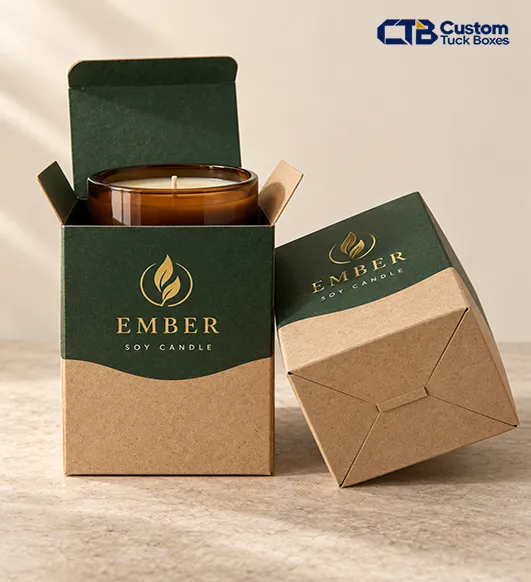
Consider this style if the packing process may benefit from a pre-glued base; confirm suitability.
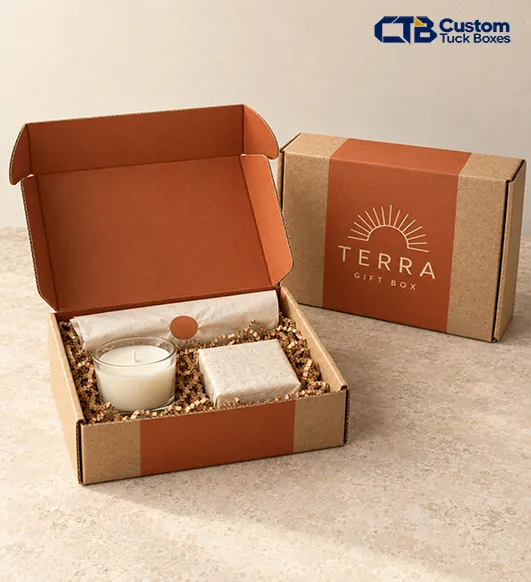
Compare an integrated tuck-in lid format for a different presentation.
Compare flap directions and practical considerations.
Prepare product measurements and clearance details.
Review board considerations before choosing a specification.
Tell us what the carton will hold, its approximate dimensions and the quantity you need. Include your preferred board, print and finish options if known. We’ll use your brief to discuss a specification and quote.
Yes. In a straight tuck end construction, the main top and bottom tuck flaps close in the same direction. The exact flap and dust-flap shapes depend on the carton design, so review the proposed dieline before artwork approval.
Share your packaging requirements and request a quote for a made-to-order specification.